Preview

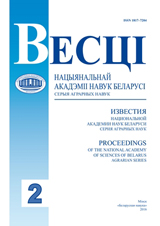
Proceedings of the National Academy of Sciences of Belarus. Agrarian Series

Advanced search

Scientific and practical peer-reviewed journal

Proceedings of the National Academy of Sciences of Belarus. Agrarian Series (Vescì Nacyânalʹnaj akadèmìì navuk Belarusì. Seryâ agrarnyh navuk) is a leading journal on agrarian sciences in theRepublic ofBelarus. The journal is registered on May 18, 2009 by the Ministry of Information of theRepublic ofBelarus in the State Registry of Mass Media, reg. No. 396. Periodicity is 4 issues per annum. The area of distribution is The Republic of Belarus and foreign countries (by subscription and by retail). 

The Journal presents the results of experimental and theoretical research, carried out by the National Academy of Sciences and other Belarusian and foreign scientific institutions or universities in the area of agrarian-industry economics, agriculture and plant growing, livestock breeding and veterinary medicine, mechanization and power engineering, farm products processing and storing. 

Besides, the journal publishes analytical reviews of scientific and technical achievements in abovementioned directions, the chronicle of scientific life of the National Academy of Sciences ofBelarus. In the column "Scientists of Belarus", the Journal publishes anniversary articles about the famous scientists and acquaints readers with their biography and works. Articles in Russian, Belarusian, and English languages are allowed for publication. 

The journal is included in the following databases — Emerging Sources Citation Index (ESCI) on the Web of Science platform, АГРОС (Database of the Russian Central Research Agricultural Library, cnshb.ru); AGRIS (FAO International System for Agricultural Science and Technology); CABA (CAB Abstracts, one of the World's leading agricultural databases); Ulrichsweb (Global Serials Directory). 

The Journal is included in The List of Journals for Publication of the Results of Dissertation Research in theRepublicofBelarusand in the database of Russian Science Citation Index (RSCI) – the database of Scientific Electronic Library (eLibrary.ru).

One can find contents of the Journal’s issues, as well as abstracts of published articles, at the websites of the publisher (belnauka.by) and of the NAS of Belarus (http://nasb.gov.by/eng). The journal is also presented at the website of the I.S. Lupinovich Belarusian Agricultural Library of the NAS of Belarus (http://vesti.belal.by).

Number of pages: 128.

The Journal is included in the Subscription Catalogue of the Republic of Belarus: the subscription indices are 74842 (for individuals) and 748422 (for institutions). 


Current issue

Vol 64, No 1 (2026)
View or download the full issue PDF (Russian)

ECONOMICS

7-15 18
Abstract

Ensuring food security is one of the key objectives of the global economy and international politics. In an increasingly interdependent world, it serves not only as an economic but also as a strategic factor of global stability. The modern development of the agricultural economy is determined not only by the growth of production indicators, but also by the need to strengthen the resilience of food systems in the face of global challenges – climate change, population growth, and intensifying international competition. National food systems are shaped by various models of institutional design, where each country strives to find a balance between sustainability, efficiency, and social equity. China’s experience demonstrates a strategy of large-scale state regulation and technological modernization of agriculture, while Switzerland focuses on environmental sustainability and high product quality standards. The Republic of Belarus, possessing significant agricultural potential and a favorable geographical location, plays an important role in ensuring regional and global food sustainability. The analysis of global trends and national practices makes it possible to identify key directions for the development of food systems and to define Belarus’s place in shaping the global architecture of food security.

16-34 17
Abstract

The imbalance of the population’s diets in the modern conditions is characterized by excessive intake of salt, saturated fats and sugar, deficiency of complex carbohydrates, polyunsaturated fatty acids, micro- and macronutrients. This leads to impaired physical development, tension of metabolic processes and adaptation mechanisms in the human body, as evidenced by the annual increase in noninfectious diseases. In this regard, making a food environment that contributes to full, balanced and healthy diet for all categories of the population is one of the priorities of national policy. A methodology has been developed for assessing and predicting the development potential of the specialized food market, that combines goal and objectives, principles and methods, an algorithm and a system of criteria and indicators for assessing the market segments development. The methodology was tested based on example of the segments of children’s, sports, dietary therapeutic and preventive nutrition in the Republic of Belarus, which allowed to assess potential market capacity, taking into account the determinants of market formation and substantiate a set of promising development directions. The practical significance of the development lies in its focus on increasing the physical and economic accessibility of specialized food products to consumer target groups by creating the necessary socio-economic conditions in the country that ensure effective integration of scientific, industrial and trade spheres in the direction of improving the system of development, commercialization, introduction and promotion of innovative products with active regulatory and coordinating role of the state.

AGRICULTURE AND PLANT CULTIVATION

35-51 16
Abstract

Induction of plant immunity to harmful organisms using biologically active substances with elicitor (signal) action is the most promising modern method of plant protection. Among them, chitosan-based agents are widely used, their effect is manifested in an increase in disease resistance by 30–40 %, an increase in biosynthetic processes of formation of amino acids and vitamins, growth stimulation, which increases crop productivity. In potato growing, a serious problem, in addition to fungal infections, is the accumulation and transmission of bacteria and viruses in crop plantings, what leads to significant yield losses (25–75 %). Moreover, there are no antiviral and antibacterial drugs for use in potato production. At the same time, chitosan and other biologically active substances, having a wide range of unique biological activities, for example, have the ability to induce resistance to both fungal and viral diseases of plants. Therefore, one of the areas for improving potato production, its quality, stabilizing the phytosanitary condition of crop plantings can be the expansion of the range of biologically active substances and the improvement of the methods of their use. The study of the effect of new environmentally friendly chitosan-based agents on the phytosanitary situation in potato plantings and productivity indicators in the conditions of Western Siberia showed that they increased crop germination by 16.0–68.0 %, reliably increased plant length by 3.2–18.1 %, plant weight by 11.1–24.8 %, and the number of stolons and tubers by 14.8–73.2 and 8.0–43.2 %, tuber weight by 8.2–25.8 %. These agents reduced the development of rhizoctonia in the seedling phase by 6.7–14.6 %, the prevalence of macrosporiosis from 10.0 to 30.0 %. With a hundred percent spread of late blight, its development at the initial stage of damage had differences and was less than in the control. Its minimum development (by 1.5 points, control 2.8 points) was noted in the case of treating planting tubers with agents No. 1, 7, 8 and 12, and treating plants during the growing season with agent No. 1. When using a combination of agents No. 7 (treatment of tubers) and No. 12 (spraying plants), viros is in crop plantings was completely absent. The crop yield when using new agents varied on average over three years from 14.5 to 20.0 t/ha, the yield increase was from 1.4 to 6.9 t/ha (from 10.7 to 52.7 %).

ANIMAL HUSBANDRY AND VETERINARY MEDICINE

52-58 18
Abstract

Currently, pig farming in the Republic of Belarus is characterized by a sharp increase in genetic productivi- ty potential, which has led to the need to improve the comfort of animal housing conditions. In this regard, the possibility of increasing air exchange in premises for keeping suckling meat-type sows was studied. The research was conducted during the cold, transitional, and warm periods of the year. The level of air exchange in the experimental group was increased during the cold period to 110 m3/h per head, during the transitional period to 150 m3/h per head, and during the warm period to 200 m3/h per head. This led to a decrease in indoor air temperature by 0.1–0.4 °C, relative humidity by 3.5–4.1 р. р., carbon dioxide content by 0.01–0.02 р. р., ammonia content by 0.2–0.7 mg/m3, an increase in oxygen content by 0.2–0.5 р. р., and an increase in air velocity by 0.04–0.1 m/s. The improvement in the microclimate contributed to an increase in the average daily weight gain of piglets during the suckling period by 3.3–4.0 % and an increase in litter weight at weaning by 2.8–6.5 %.

59-68 29
Abstract

The Yaroslavl cattle breed is known for high fat and protein content in milk, resistance to infectious diseases, adaptability to feeding and maintenance conditions in the central and northern zones of the European part of the Russian Federation. The Government has set a task to develop programs to improve dairy cattle breeds for their preservations and increasing competitiveness. Therefore, the goal was set to evaluate the productive characteristics and reproductive quali- ties of Yaroslavl cows of different lines bred in the Yaroslavl and Vologda regions. The research revealed that the Yaroslavl population is the most diverse in terms of the number of lineages. Cows of the Yaroslavl population outperform cows of the Vologda population in milk yield for 100 days of lactation and for 305 days of lactation for the last completed lactation by 515.6 and 1 804.2 kg, respectively. The cows of the Vologda region are the most dairy-rich, with a superiority in fat percentage over the Yaroslavl population in all lines from 0.35 to 0.58 %. Cows of the Yaroslavl population of the Volny 470 YAYA-4370 line had the earliest age of the first insemination, the first fruitful insemination and the first calving – 16.2 months, 17 months and 26.1 months, which is lower than that of the Vologda population by 5.8; 5.0 and 3.0 %, respectively, which is statistically significant. Animals of the Yaroslavl population have the highest live weight at birth and the last completed lactation along  all lines except for the Sorcerer’s line 62 YAYA-1544. Cows of the Vologda region have the longest period of economic use, which ranges from 2.4 to 6.5 lactation. The research allows to improve genetic potential of the Yaroslavl cattle breed through the purpose breeding according to lines and through conservation of genetic diversity. The receiver results can be used to develop selection programs, what will contribute to further work with his valuable breed.

69-75 22
Abstract

The results of a hydrochemical analysis conducted to determine the causes of mass death of fish are presented. The key indicators of water quality, including concentrations of dissolved oxygen, ammonium nitrogen, nitrates, phosphates, as well as pH and temperature levels, are considered. These parameters were chosen as the indicators most sensitive to changes in the aquatic environment and able to reflect the overall state of the ecosystem. Special attention is paid to the seasonal dynamics of changes in hydrochemical parameters. The analysis revealed a deviation of a number of parameters from the maximum permissible norms, which indicates possible anthropogenic pollution of water bodies. The data obtained make it possible to establish a link between changes in the hydrochemical composition of water and observed fish deaths, which can serve as a basis for developing measures to prevent similar environmental incidents in the future. Such measures may include increased control over discharge sources, the introduction of wastewater treatment programs, and regular monitoring of the condition of reservoirs.

MECHANIZATION AND POWER ENGINEERING

76–88 21
Abstract

This study was conducted to evaluate the feasibility of optimizing a series-type air distribution system in pneumatic planter transforming uniform seed placement through efficient vacuum pressure with the blower rotation for the planting of maize crop. A laboratory-based experimental facility was designed to test the performance of the pneumatic planter under four blower speeds (600, 900, 1 200, and 1 500 rpm) and three seed metering (SM) disc rotational speeds (17, 22, and 28 rpm). The most critical performance parameters were the vacuum pressure, the velocity losses of air, and the uniformity of seed-drop. To determine the effect of the blower rotation the on vacuum pressure, the vacuum pressure was observed at different locations in the air distribution system. The experimental results were confirmed with ANSYS simulation modeling the dynamics of airflow and pressure distribution in the series air channel-type. The physical tests and the simulation tests done to determine the behaviour of the seeds in the airflow (vacuum pressure) and accurate delivery of the seeds. The findings revealed that revolution of blowers and rotation of the disc created a statistically significant difference (p < 0.05) in a vacuum pressure and seed distribution uniformity. The minimum optimal range of vacuum was –4.2 to –3.9 kPa that was created at 1 500 rotations of blower per minute (BR4) and 22 rpm disc equivalence and the vacuum range was efficient on seed pick up and vortex seed loss. On the other hand, when the speeds of the blower were low (600–1 200 rpm) the vacuum pressure was weak (–0.24 to –2.28 kPa), with which the placement of the seeds was erratic. Even though BR4 showed better performance, it also had the negative impact of increasing power requirement and fuel usage due to the heavy demand of the PTO on the tractor. The series type pressure distribution geometry optimized the performance of the pneumatic seed planter in terms of seed placement at BR4 and disc speed of 22 rpm. Despite the enhanced reliability of operations when there is increased speed of blowers, careful thought should be put on energy efficiency.


Creative Commons License
This work is licensed under a Creative Commons Attribution 4.0 License.